AI & Storytelling · legal explainer
AI Film Copyright in 2026: Who Owns an AI-Generated Movie?
Learn who owns an AI-generated movie, which human contributions copyright protects, and how filmmakers can build a clean chain of title in 2026.
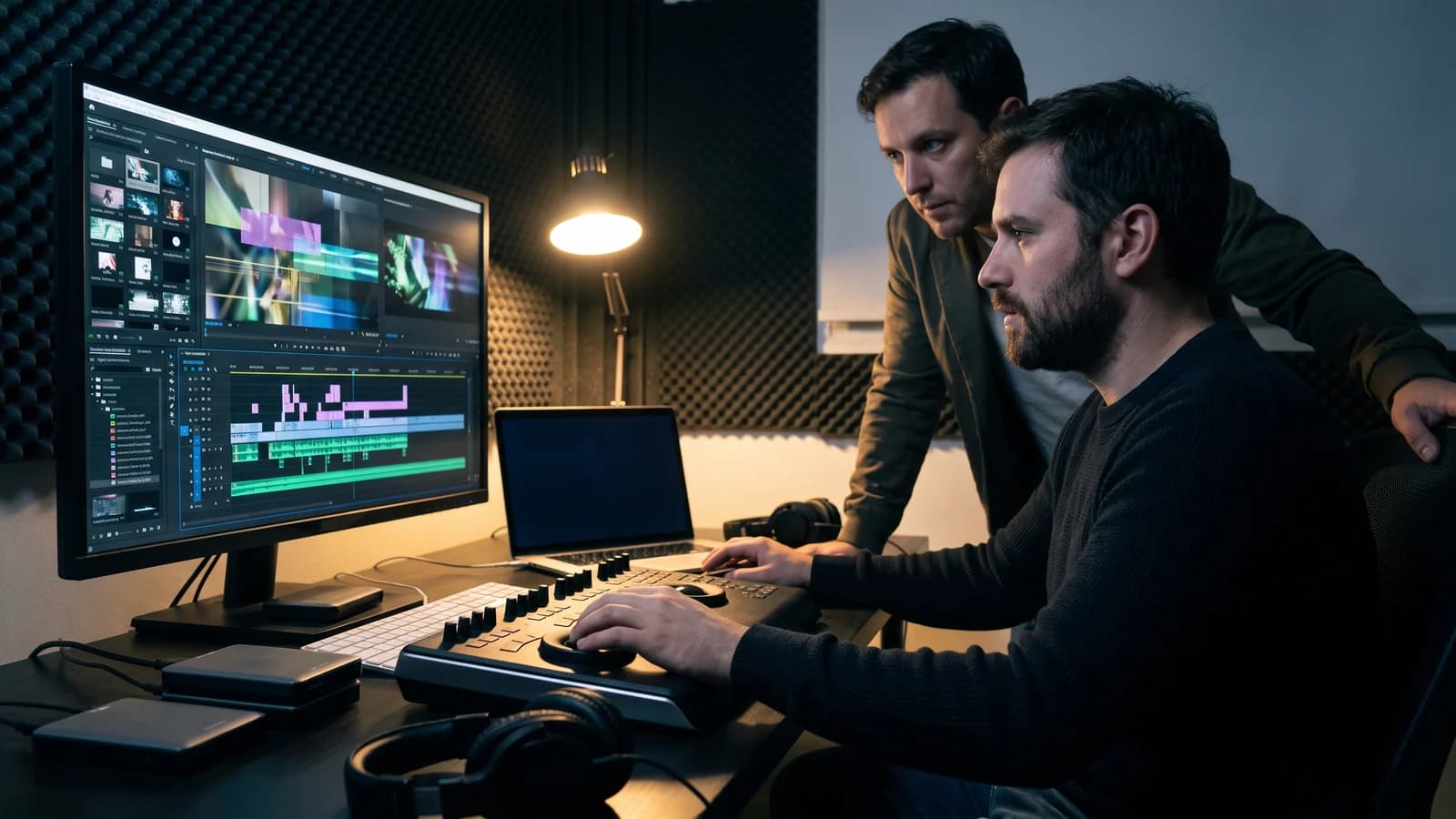
You wrote the screenplay. You generated some shots. You cut the footage, rebuilt the sound, replaced three uncanny hands and spent a weekend making one synthetic close-up feel like a human decision.
So who owns the movie?
The annoying answer is “it depends.” The useful answer is much sharper.
In the United States, AI film copyright protects the original expression created by human beings—the screenplay, direction, performances, cinematography, music, sound, editing, creative selection and substantial modifications. A raw AI-generated shot may receive no copyright protection by itself. The movie can still contain protectable human authorship, but ownership of those human contributions depends on contracts, employment and valid transfers.
In other words: the film is not one legal blob. It is a stack of creative decisions wearing a trench coat.
AI film copyright in one frame
If you remember only six things, make them these:
- AI cannot be the copyright author. On March 2, 2026, the U.S. Supreme Court declined to review Thaler v. Perlmutter, leaving in place the D.C. Circuit’s ruling that the Copyright Act requires a human author (Supreme Court docket).
- Using AI does not cancel human copyright. Protectable human expression can coexist with unprotectable generated material.
- A prompt is not a magic ownership receipt. The U.S. Copyright Office says prompts generally function as instructions; whether the output reflects enough human authorship is a case-by-case question.
- Selection, arrangement and modification can matter. A human-created edit, sequence or transformation may be protectable even when individual generated pieces are not.
- Copyrightability and ownership are different questions. First ask what a human authored. Then ask who owns that contribution under contracts and copyright law.
- Copyright is not the only clearance. A film can have a copyrightable edit and still create problems with a performer’s likeness, a cloned voice, music, source images, tool terms or someone else’s protected characters.
This is why “I paid for the premium plan” is not a chain of title. It is a credit-card event.
The 2026 rule: find the human expression
The U.S. Copyright Office’s current position is not “AI bad, registration denied.” It is more surgical.
Its Part 2 report on copyrightability says copyright continues to protect original expression made by a human author, including work created with AI assistance. It also says purely AI-generated material is not protected, and that prompts alone generally do not provide enough human control over expressive elements to make the user the author of the output.
That last distinction matters. Compare:
- “Generate a lonely astronaut in a red desert” gives the system broad control over framing, face, pose, weather, texture and a hundred other expressive choices.
- A human-written screenplay, hand-built shot plan, original performance, controlled camera input, frame-by-frame paint work, compositing and a deliberate final edit show much more human expression.
There is no universal “37 prompts equals authorship” threshold. The Office rejects a mechanical test and looks at the human contribution in the actual work.
Its registration guidance for AI-containing works also tells applicants to disclose more-than-trivial AI-generated material and describe the human-authored contribution. That means the smartest production question is not “How do we make the AI disappear from the paperwork?” It is “Can we identify exactly what our people created?”
A movie can be protected even when some shots are not
Imagine this production:
- Lena writes an original 18-page science-fiction screenplay.
- She records two actors performing the dialogue.
- A video model creates several exterior shots from her instructions and reference material.
- Lena chooses four generated clips from 300 attempts.
- She changes their timing, composites original practical footage into them, paints out defects and builds the sequence around the actors’ reactions.
- A composer writes the score and a sound designer creates the final soundscape.
The raw generated exteriors may not be copyrightable on their own. That does not make the whole film ownerless.
The screenplay, recorded human performances, original footage, score, sound design, compositing and creative edit may all contain human authorship. The Copyright Office’s motion-picture registration guidance treats a movie as an audiovisual work, while its application help identifies contributions such as direction, production, script, cinematography and editing. A registration claim can be limited to the authorship the claimant actually owns.
Think of the final film as a lit stage. Copyright does not have to illuminate every floorboard for the room to be visible. But you need to know where the light stops.
What selection and arrangement can—and cannot—save
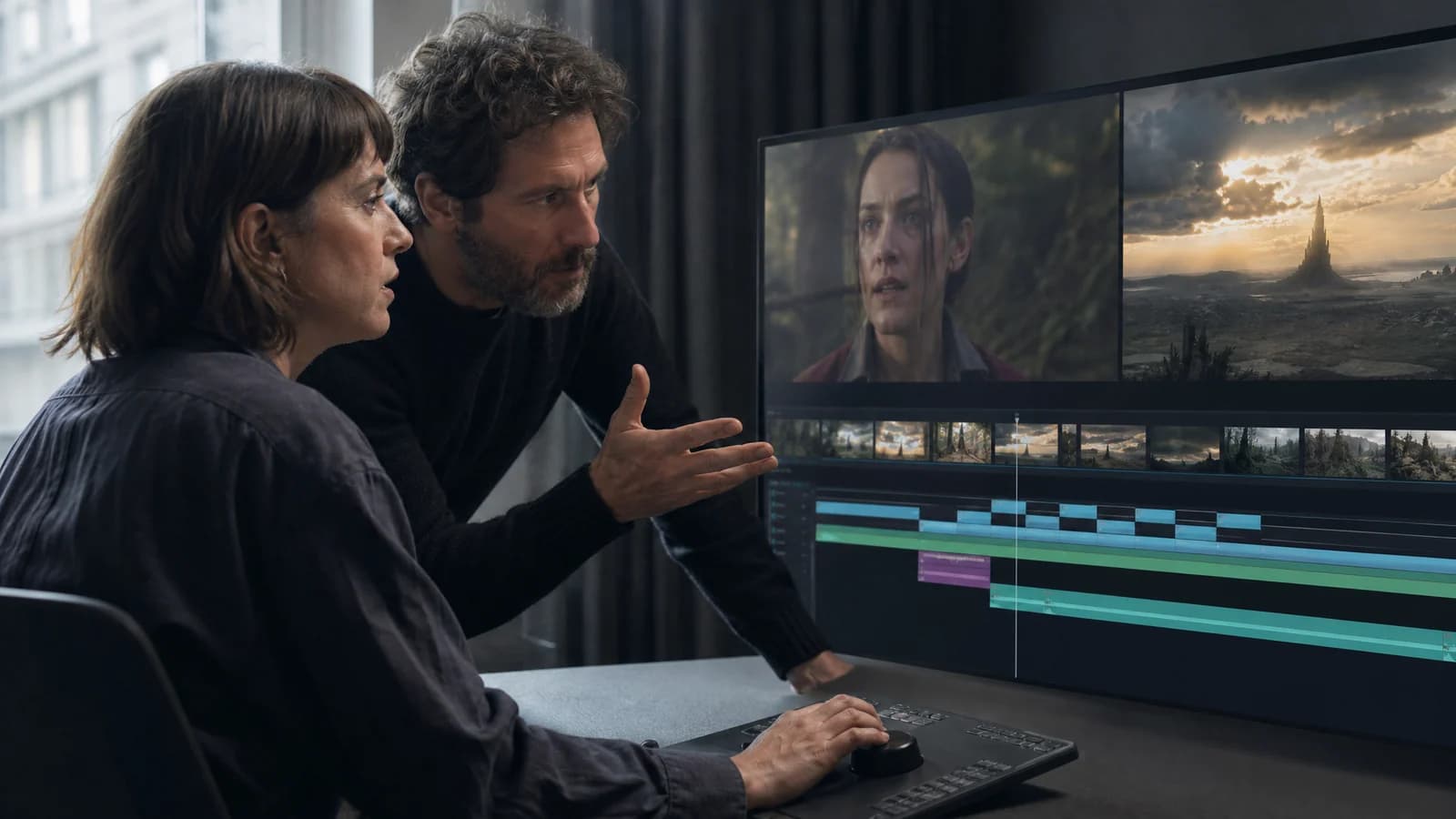
Filmmakers already understand selection as authorship. Editing is choosing this look before that answer, holding a silence two seconds longer and cutting away before the smile becomes reassurance.
The Copyright Office recognizes that a human’s creative selection, coordination and arrangement of material can be protected. It also recognizes human modifications to generated material when those changes contain enough original expression.
That does not automatically give you exclusive rights over every generated frame inside the sequence. Your copyright may cover the authored arrangement or the new material you added, not the underlying AI output standing alone.
This is “thin” in the practical sense: another person might be unable to copy your finished sequence, score, timing and compositing, while remaining free to use an otherwise unprotected generated image that appears within it. The exact boundary is fact-specific, which is why project files beat confident memories.
Who owns the human-authored parts?
Now the second question enters with a clipboard.
Under Section 201 of the Copyright Act, copyright initially vests in the author. For a qualifying work made for hire, the employer or commissioning party is treated as the author and owner unless a signed writing says otherwise. Copyright can also be transferred.
So the writer-director who created everything alone may begin with a fairly simple ownership story. Add a freelance composer, animator, editor, actor, sound designer and producer, and the plot develops subplots.
For each human contribution, ask:
- Who created the expression?
- Was it created by an employee within the scope of employment?
- If it was commissioned, does it qualify as a work made for hire, with a signed agreement?
- Is there a signed copyright assignment or license?
- Does the production company own the rights needed for the planned release?
Paying an invoice does not automatically transfer copyright. Owning the hard drive does not automatically transfer copyright. Putting “all rights” in an email subject line is not a substitute for a properly drafted agreement.
The AI tool may be the newest character in the room, but missing contributor paperwork remains the old reliable villain.
Build an authorship ledger before the final export
A useful AI film record is less glamorous than a concept trailer and far more valuable at distribution time.
Create one ledger with a row for every meaningful asset:
| Asset | Human contribution | AI role | Rights evidence | Keep |
|---|---|---|---|---|
| Screenplay | Original text, scenes and dialogue | Brainstorming or none | Dated drafts, writer agreement | Source files and PDFs |
| Generated shot | Shot design, references, selection, compositing | Generated base imagery | Tool terms, input licenses | Prompt/output history and project file |
| Performance | Actor’s voice, face and acting choices | Cleanup, dubbing or replica | Performer release, union paperwork, consent | Original recording and approvals |
| Music | Composition, performance and recording | Stem generation or synthetic sound | Composer agreement, licenses | Session files and cue sheet |
| Final edit | Sequence, timing, transitions and narrative construction | Generated clips inside edit | Editor agreement, production ownership | Timeline, exports and version history |
The ledger does three jobs at once. It helps counsel assess registration. It gives a distributor or insurer something better than “we used AI here and there.” And it forces the creative team to notice a rights gap while the person who can fix it still answers email.
Keep the evidence of human decisions
Save:
- dated screenplay and storyboard versions;
- original photographs, footage, performances and recordings used as inputs;
- the tool name, plan, terms and date of use;
- prompts, seeds, references and output IDs when available;
- rejected outputs as well as selected ones;
- edit timelines, masks, paint layers, compositing files and sound sessions;
- contributor agreements, assignments, licenses and performer consents; and
- notes identifying AI-generated material in the final cut.
Do not manufacture a heroic prompt diary after the film gets attention. Preserve the ordinary production trail as you work.
Our screenplay-to-AI-film workflow already recommends generating a proof sequence before attempting a feature. Add the ledger at that stage. Ten shots are easier to audit than ten thousand.
The screenplay is your strongest human anchor
For a screenwriter, this is the most useful news in the entire article: a genuinely human-authored screenplay gives the project a clear expressive foundation.
The script fixes characters, scenes, dialogue, dramatic order and countless specific choices before a video model renders a pixel. A finished film does not become identical to its screenplay, and registering one does not automatically register the other. But the script is powerful evidence of what the writer contributed.
Keep clean versions. Record collaborations. Use signed agreements. If AI helped with brainstorming, distinguish assistance from generated expression that survived into the pages.
This is also why you should solve story problems before paying to generate them. If the protagonist stops making decisions in Act Two, no ownership ledger can turn drift into drama. Use a clear screenplay outline, then pressure-test the draft before production multiplies every uncertainty.
WGA rules and copyright law are different rulebooks
Copyright law asks what expression is protectable and who owns it. A collective bargaining agreement governs work under that contract.
The WGA’s current AI rights guidance says generative AI is not a writer and AI-generated written material is not literary material under the MBA. A company cannot require a writer to use AI, while a writer may choose to use it if the company’s policies permit. Companies must disclose AI-generated material provided to a writer.
The 2026 MBA changes preserved the AI protections negotiated in 2023 and added notice to the Guild when a company licenses writers’ work to train a commercial generative-AI system for outputs, with an opportunity for Guild discussion.
Those rules matter enormously on covered projects. They do not mean every independent AI-assisted screenplay is automatically copyrightable, and they do not replace a production’s chain of title. Contract protection, credit, compensation and copyright overlap. They are not synonyms.
A face or voice opens a different legal door
Suppose your AI film has an original edit, human-authored screenplay and cleared music. Then someone notices the bartender looks exactly like a living actor who never entered the building.
Copyright ownership does not answer whether you had permission to use that person’s identity.
The Copyright Office’s digital replicas report catalogued gaps and differences in the legal protections around unauthorized replicas. State publicity and digital-replica laws may apply, along with contracts and other claims.
For union productions, the rules are more specific. SAG-AFTRA says its 2026 TV/Theatrical Agreement expands protections around digital replicas, synthetic performers, biometric data, notice, bargaining and compensation. The precise obligations depend on the agreement and use.
The practical rule is simple: do not use “the model could generate it” as a substitute for consent.
Five AI film scenarios, five different answers
1. You wrote and shot the film; AI removed a boom mic
This looks like ordinary tool assistance. The human-authored film remains protected. Keep the original footage and edit project anyway.
2. You typed one prompt and accepted the first generated clip
The prompt may document your intent, but the generated expressive details were largely determined by the system. Do not assume the clip has standalone copyright protection.
3. You built a sequence from 200 generated shots
Your human selection, arrangement, timing, score and modifications may be protected. The untouched generated shots may not be. Save the timeline and decisions that show the authored whole.
4. You generated a performer who resembles a real person
Now copyright is only part of the analysis. Likeness, voice, contract, labor and state-law issues may be waiting off camera.
5. You own copyright in the edit but violated the tool’s terms
Copyright and contractual permission are separate. Check whether the account tier allowed commercial use, what the provider says about outputs, which inputs you were allowed to upload and whether the terms changed between generation and release.
The pre-release AI film copyright check
Before a festival submission, financing conversation or distribution pitch:
- List every generated element that survives in the film.
- Identify the human-authored expression around each one.
- Confirm rights to every input, reference, performance, recording and music cue.
- Review the tool terms that applied on the generation date.
- Collect signed contributor, work-for-hire, assignment, license and consent documents.
- Preserve the project files that show selection, editing and modification.
- Prepare an accurate description of human authorship and excluded AI material for any registration.
- Have experienced entertainment counsel review the chain of title when money or distribution is real.
That last step is not panic. It is producing.
Make the screenplay the cleanest part of the movie
AI film copyright is not a switch that flips the whole movie on or off. It is a map of human expression, generated material, ownership agreements and separate permissions.
Start with the thing you can control most completely: the screenplay.
Lock the premise. Track the character decisions. Make the ending earn the opening. Keep your drafts. Then build the visual experiment on top of a story whose authorship—and purpose—are unmistakably human.
Before generating the expensive version of a weak scene, get an outside read on the pages. Create a free account and your one welcome credit can be used for one free Quick Analysis, giving you structured feedback on character, structure and pacing while the rewrite still costs keystrokes instead of regenerated shots.
The future of filmmaking may be full of synthetic images. Your creative decisions should leave fingerprints.
Sources
- Copyright and Artificial Intelligence, Part 2: Copyrightability — U.S. Copyright OfficeAccessed 2026-08-19
- Copyright Registration Guidance: Works Containing Material Generated by Artificial Intelligence — U.S. Copyright OfficeAccessed 2026-08-19
- Thaler v. Perlmutter, Docket No. 25-449 — Supreme Court of the United StatesAccessed 2026-08-19
- Motion Pictures — U.S. Copyright OfficeAccessed 2026-08-19
- Copyright Ownership and Transfer — U.S. Copyright OfficeAccessed 2026-08-19
- Artificial Intelligence: Know Your Rights — Writers Guild of America WestAccessed 2026-08-19
- 2026 MBA Contract Changes FAQ — Writers Guild of America WestAccessed 2026-08-19
- 2026 TV/Theatrical Contracts — SAG-AFTRAAccessed 2026-08-19
- Copyright and Artificial Intelligence, Part 1: Digital Replicas — U.S. Copyright OfficeAccessed 2026-08-19