Screenwriting Craft · screenwriting craft guide
How to Write a Horror Screenplay That Scares Before the Monster Arrives
Learn how to write a horror screenplay with a fear engine, escalating dread, character-driven scares, clear rules, and a brutal aftermath.
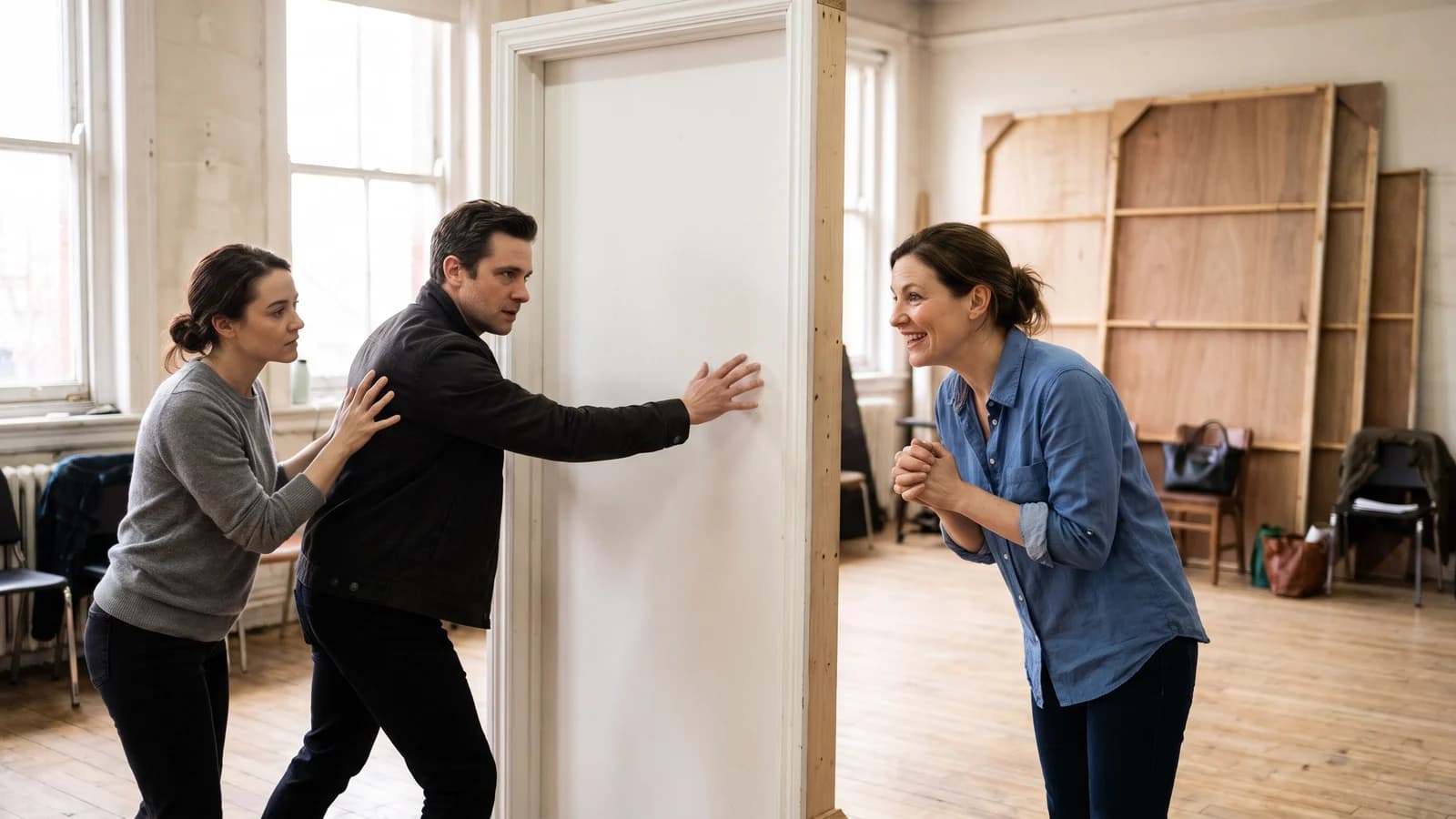
The monster is not your horror screenplay.
The screenplay is the ten minutes before the monster enters—the locked bedroom door, the wet footprints that stop halfway down the hall, the father who insists everything is fine while quietly moving the kitchen knives.
That is the job. Not “be scary.” Not “add a jump scare on page 17.” Your job is to make the audience understand what might happen, desperately hope it will not, and keep reading anyway.
To write a horror screenplay, build the story around a specific human fear; give the protagonist something precious to lose; establish rules the audience can track; escalate dread through choices, not random incidents; and make every scare change the character’s plan. The creature, killer or curse is the delivery system. Fear is the story.
Here is a practical process for designing that story—from the first unsettling image to the final consequence.
Horror screenplay structure in one sentence
A horror screenplay is a pressure system: a character tries to protect something, a threat learns how to attack it, and every attempted escape makes the final confrontation more personal.
That sentence works whether the threat carries a knife, lives in the walls, arrives from space or has the protagonist’s face.
Before outlining, answer four questions:
- What ordinary fear does the horror enlarge?
- What does the protagonist stand to lose besides their pulse?
- What rule makes the threat understandable enough to dread?
- What choice will the protagonist have to make when survival is no longer free?
If those answers are strong, you have a movie. If the only answer is “there is a creepy thing,” you have a trailer.
1. Find the fear engine before inventing the kills
The fear engine is the human anxiety your plot keeps pressing.
It is not the villain. A masked intruder is a threat. “Nobody will believe me until it is too late” is a fear engine. A haunted house is a location. “My family would rather protect its secrets than protect me” is a fear engine.
Jeffrey Reddick, creator of Final Destination, told Script Magazine that the franchise tapped into the universal fear of death—but he also stressed that suspense does not matter if viewers do not care about the leads. That pairing is the useful part: a broad fear becomes dramatic only after it attaches to a particular person.
Try this sentence:
This is a story about the fear that [human anxiety], expressed through [horror mechanism], attacking [relationship or identity the protagonist needs].
For example:
This is a story about the fear that caregiving can erase your identity, expressed through a patient who steals memories, attacking a night nurse’s bond with her daughter.
Now the horror can do more than chase somebody down a corridor. Every stolen memory threatens the nurse’s job, her credibility and the relationship she is trying to save. The mechanism and the emotion are pulling the same rope.
Do not begin with “What has not been done?” Begin with “What can I not stop worrying about?” Originality often appears when a familiar genre machine is forced to process a fear that belongs specifically to you.
2. Build the person the audience will fear for
Horror characters do not need to be likable. They need to be investable.
Give the protagonist:
- a concrete want before the horror begins;
- a relationship that can be damaged;
- a coping strategy that works in normal life;
- a private contradiction the threat can exploit; and
- one line they will not cross—yet.
Ari Aster described Hereditary as emerging from a painful period in his own family and said he wanted to work in a horror tradition that took time with atmosphere and character. In the Motion Picture Association’s interview, the family drama is not garnish around the supernatural plot. It is the material the supernatural plot burns.
That is why “reluctant skeptic investigates a haunting” is thin, while “a mother who mistakes control for love investigates a haunting that makes her children afraid of her” has teeth.
The protagonist’s flaw should initially look like a survival skill:
| Useful in ordinary life | Dangerous inside the horror story |
|---|---|
| Hypervigilance | Sees patterns nobody else can verify |
| Loyalty | Protects the person carrying the threat |
| Rationality | Rejects impossible evidence too long |
| Empathy | Opens the door to something mimicking pain |
| Independence | Refuses help until isolation is complete |
If you are still building that internal change, use the character-arc process before plotting ten elaborate deaths. An audience fears harder when the external danger attacks the exact belief the character must outgrow.
3. Make the opening teach us how to be afraid
The first scene does not need a body. It needs a contract.
By the end of the opening, the audience should feel:
- what flavor of horror they entered;
- whose experience will anchor it;
- what kind of detail deserves attention; and
- what question will drag them into the next scene.
Current Final Draft guidance on horror screenplay openings recommends establishing tone and subgenre early, grounding the scene in recognizable reality, and revealing character through a response to fear. The Directors Guild of America’s clip on Jordan Peele’s opening to Get Out similarly emphasizes his desire to activate the audience’s imagination immediately.
Notice what that does not require: a mythology lecture.
Try the normal / wrong / worse opening:
- Normal: A person performs an ordinary action with a clear goal.
- Wrong: One detail violates the expected pattern.
- Worse: The person makes a reasonable choice that increases their exposure.
A hospital custodian wheels an empty bed to the service elevator. Normal. The elevator arrives with wet footprints inside. Wrong. He steps in to press the emergency button because a patient may be hurt. Worse.
The scene has movement, character and a visual question. No one needs to whisper, “This building was constructed over an abandoned orphanage.”
4. Give the threat rules—and leave one door unexplained
Total randomness does not create fear for long. It creates noise.
The audience needs enough of a pattern to anticipate pain. That anticipation is dread.
Write a private rule sheet for the threat:
- What attracts it?
- What can it perceive?
- What can it do?
- What can it not do?
- What price delays it?
- How does it change after each encounter?
- Which “rule” is actually a character’s incorrect assumption?
You do not have to explain all of this in dialogue. You do have to behave as if the answers exist.
Rules create dramatic decisions. If the creature hunts sound, the hero must choose between silence and warning somebody. If the ghost can imitate only remembered voices, forgetting becomes protection and loss at the same time. If the killer never crosses running water, the dry season is now a ticking clock.
Keep one edge mysterious. A threat should be legible enough to strategize against and strange enough to resist becoming a household appliance with murder settings.
5. Build dread as a ladder, not a fog machine
“The room feels creepy” is not escalation.
Dread rises when information, proximity and cost change. Build a dread ladder with at least five rungs:
| Rung | What changes | Useful question |
|---|---|---|
| Trace | Evidence that may have an innocent explanation | What can the protagonist dismiss? |
| Pattern | A second event connects to the first | Who notices the link? |
| Contact | The threat responds to the protagonist | What proves this is personal? |
| Cost | Somebody loses safety, trust or control | What can no longer be restored? |
| Choice | Survival demands a sacrifice | What will the protagonist refuse to pay? |
Each rung should be caused by a decision. The protagonist opens the sealed room to disprove a rumor. They destroy the recording to protect a friend. They lie to the police because the truth would expose their own crime. Horror becomes dramatically satisfying when the characters are not simply selected for punishment by the universe’s least regulated lottery.
Robert Eggers explains in his BAFTA screenwriters’ lecture that atmosphere is an accumulation of details drawn from research, weather, light and the physical world. He also balances atmosphere against clear story and changing power dynamics. That is the distinction: atmosphere makes the ladder feel cold under the character’s hands; story makes them climb it.
6. Write scares as tiny stories
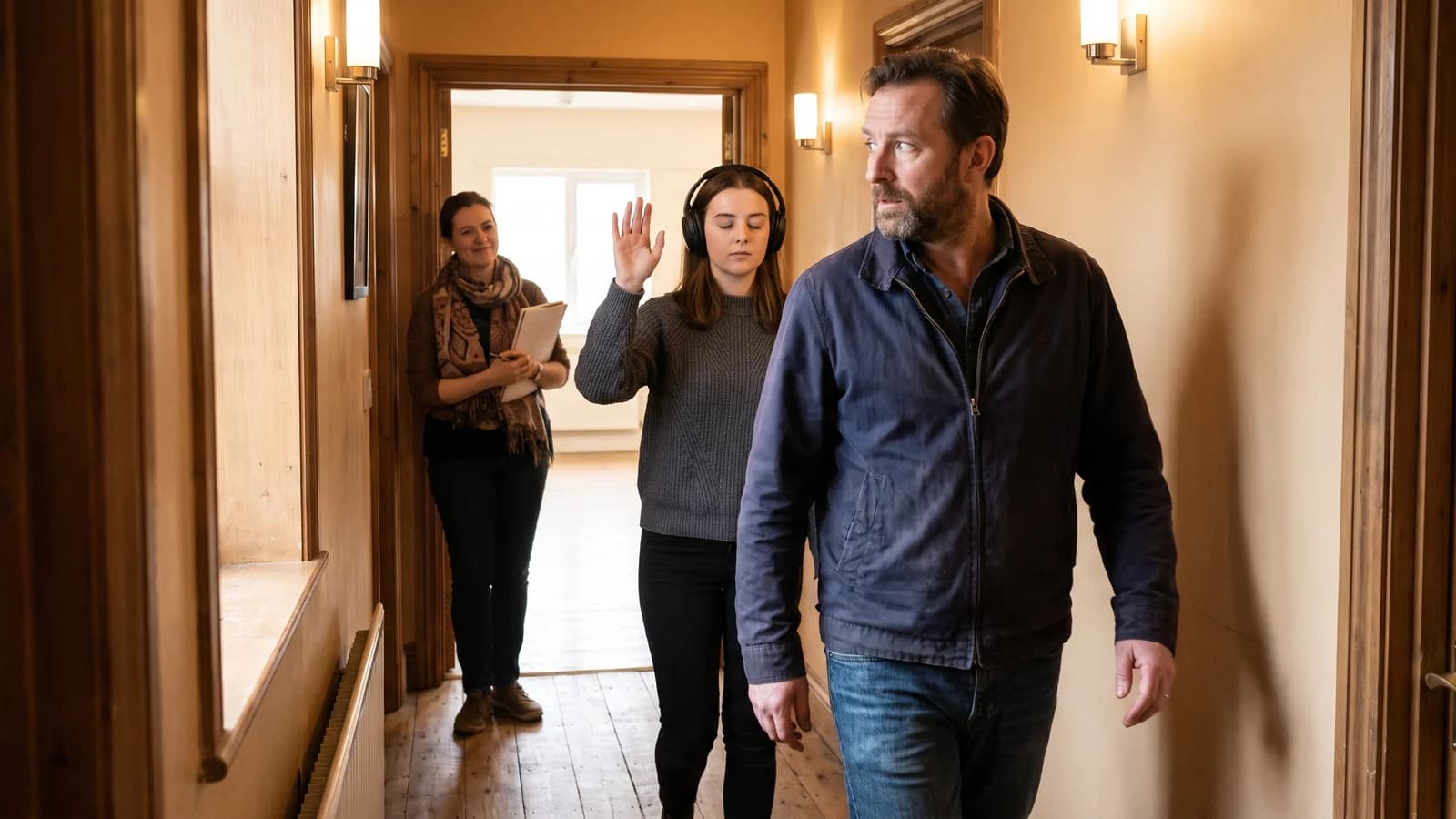
A scare is not “something jumps out.” It is a miniature dramatic sequence.
Use five beats:
- Promise: Establish what the character expects.
- Intrusion: Introduce a detail that does not fit.
- Investigation: Make the character act.
- Turn: Reveal that they misunderstood the danger.
- Aftermath: Change the plan, relationship or rules.
Reddick’s explanation of Final Destination death scenes is instructive: the suspense comes from not knowing where the accumulating danger is going. The final impact is only the period at the end of a sentence the scene has been writing for minutes.
Imagine that night nurse again.
She hears her daughter humming over the hospital intercom. The daughter is at home. She follows the voice to a dark pediatric room. The humming stops when she enters. Her phone rings: her daughter cannot remember the tune.
The scare works even if nothing leaps from behind the curtain. It promises a familiar voice, intrudes with impossible location, provokes investigation, turns the danger toward memory and leaves a cost behind.
If the aftermath is “everyone keeps doing what they were doing,” cut the scare or make it bite harder.
7. Control what the audience knows
Suspense is an information design problem.
For every sequence, decide which of these modes you are using:
- Audience ahead: We see the figure enter the house; the character does not. The fear comes from waiting.
- Character ahead: The character recognizes the nursery rhyme; we do not. The fear comes from exclusion.
- Audience and character aligned: We discover the open grave together. The fear comes from immediate uncertainty.
- Everybody wrong: Both audience and character accept an explanation that later collapses. The fear comes from reinterpretation.
Switch modes intentionally. If the audience is always behind, the screenplay may feel coy. If the audience is always ahead, the characters may look foolish. If everybody learns everything at the same instant, the rhythm becomes predictable.
This is also where horror and a good plot twist share machinery. Both plant a visible truth, guide the audience toward a plausible interpretation and later force that interpretation to change. The difference is that horror makes the period before understanding physically uncomfortable.
8. Put the horror in the action lines
The reader cannot hear your score. They cannot see the color grade. The page must control attention with words.
Write action lines that are:
- specific: “A wet thumbprint appears on the inside of the glass,” not “Something scary happens.”
- selective: describe the detail that changes the scene, not every chair;
- paced: break paragraphs when the audience’s attention or understanding changes;
- playable: give actors and departments observable behavior; and
- tonal: let the prose carry this movie’s personality without becoming a gothic novel.
Eggers describes unusually detailed screenplays because atmosphere is load-bearing in his films. He also warns that this level of specificity suits his writer-director process and could be inappropriate when writing for somebody else. The lesson is not to describe every odor. It is to choose the concrete details your collaborators need to build the intended experience.
Read the scene while covering the dialogue. Can you see the fear move? If not, return to the action-line guide and replace emotional labels with observable changes.
9. Make the midpoint change the meaning of the threat
Many horror scripts become repetitive in the middle: noise, investigation, scare, denial, repeat.
The midpoint should not merely produce a larger scare. It should reveal that the protagonist has misunderstood the story.
Useful midpoint turns include:
- the safe place is the source;
- the apparent victim invited the threat;
- the rule used for protection is feeding it;
- the protagonist’s goal would deliver exactly what the threat wants;
- the monster is attacking a lie, not a person; or
- escape is possible, but rescue is not.
After the midpoint, earlier scenes should acquire a second meaning and future choices should become morally harder. That is how the script accelerates without simply increasing the body count.
10. Force a climax that answers the fear engine
The final confrontation should not test whether the protagonist can use a weapon introduced on page 82. It should test whether they can become the person the story has demanded.
Return to the fear engine.
If the story is about caregiving erasing identity, the climax might force the nurse to choose between preserving her daughter’s memories and surrendering her own. If it is about not being believed, the climax might require action without validation. If it is about inherited violence, victory may mean refusing the family ritual rather than defeating its monster.
The external mechanism and internal change should click together:
Because the protagonist finally [changes or accepts a truth], they can [take the physical action], but it costs [irreversible consequence].
A costless victory drains the poison from the genre. The character may survive. The old version of their life should not.
The horror screenplay rewrite pass
Once the draft exists, do not ask only, “Is it scary?” That question is too vague to fix.
Run six separate passes:
The fear pass
Mark every place the central human fear is dramatized. If it appears only in dialogue and the climax, the engine is disconnected from the plot.
The agency pass
Circle every choice that makes the danger closer, stranger or more expensive. Replace random attacks with consequences where possible.
The rule pass
Track what the audience believes the threat can do after every encounter. Repair contradictions that are not intentional reversals.
The dread pass
Label each sequence trace, pattern, contact, cost or choice. If the script falls back to trace after contact, the pressure has leaked.
The scare pass
For every scare, identify promise, intrusion, investigation, turn and aftermath. A missing beat often explains why the moment feels abrupt or disposable.
The daylight pass
Read the screenplay at noon with no music, no dark room and no generous imagination. The causal chain, character conflict and visual writing still need to work. Horror that survives daylight usually plays even better in the dark.
For the larger structural repair, follow the screenplay rewrite guide. Do not polish the monster reveal while the protagonist can leave the story without changing it.
The final horror screenplay checklist
Before sending the draft out, confirm:
- The threat expresses a recognizable human fear.
- The protagonist has a want that exists before the horror.
- The opening establishes tone without explaining the mythology.
- The audience can track enough rules to anticipate danger.
- Each escalation follows a character decision.
- The midpoint changes the meaning of the threat.
- Scares leave consequences.
- Action lines direct attention with concrete, filmable detail.
- The climax tests the protagonist’s deepest contradiction.
- Survival, victory or defeat has an irreversible cost.
The monster may be the image people remember. The pressure system is what makes them lean forward before it appears.
When you are too close to the draft to tell whether the dread is escalating or the characters are merely touring dark rooms, get a fresh read. Create a free AI Script Coverage Pro account, receive one welcome credit, and use it for one free Quick Analysis. Compare the report’s view of structure, character motivation, pacing and clarity with your fear engine—then strengthen the cause of the scare, not just the volume.
Sources
- Screenwriters' Lecture Series 2019: Robert Eggers — BAFTAAccessed 2026-11-01
- Jordan Peele on the Opening Scene of Get Out — Directors Guild of AmericaAccessed 2026-11-01
- Writer/Director Ari Aster on His Terrifying Debut Hereditary — Motion Picture AssociationAccessed 2026-11-01
- How to HORROR with Horror Legend Jeffrey Reddick — Script MagazineAccessed 2026-11-01
- How to Write a Horror Screenplay Opening That Hooks Readers — Final DraftAccessed 2026-11-01