Industry & Careers · filmmaker craft profile
Tony Gilroy’s Screenwriting Method: 8 Lessons From Andor
Learn Tony Gilroy’s screenwriting method through eight practical lessons on character, research, action, structure, information, and rewriting.
Tony Gilroy’s characters rarely walk into a room where the furniture is merely furniture.
The desk is a weapon. The elevator has a chain of command. The conference room has already decided who is disposable. Somewhere nearby, a competent person is lying with perfect grammar.
That is the surface pleasure of Michael Clayton, the Bourne films and Andor: smart people doing difficult jobs inside systems that do not care whether they sleep. The deeper pleasure is that the machinery never replaces the people. It squeezes them until character becomes visible.
Here is the useful answer: Tony Gilroy’s screenwriting method combines obsessive curiosity about the real world with empathy for every character, a firm destination, production-level specificity and ruthless control of the audience’s attention. He does not make a story feel intelligent by making it harder to follow. He makes the situation precise enough that every choice hurts.
That approach has fresh heat. The Peabody Awards recently honored Andor for turning the rise of authoritarianism into an urgent story about the human cost of resistance. But you do not need a galactic empire, a studio budget or twelve episodes to borrow the method. You can use it on a contained thriller, a workplace drama or the awkward comedy you are writing about three siblings selling their mother’s terrible restaurant.
The trick is to steal the engine, not the spaceship.
The Tony Gilroy screenwriting method in eight moves
Gilroy’s interviews across decades point to a remarkably consistent process:
- Know what the story is about before you decorate it.
- Study human behavior harder than screenplay rules.
- Research the physical world until action becomes specific.
- See the scene before you report it on the page.
- Control what the audience spends attention on.
- Let the ending organize the road toward it.
- Treat collaborators and production limits as part of the writing.
- Keep rewriting until the intended movie is the one on the page.
There is nothing mystical here. That is encouraging—and slightly annoying. The method asks for fewer magic tricks and more decisions.
1. Find the story’s pressure sentence
Before plot, identify the pressure running underneath it.
Not the theme as a tasteful noun. Not “justice” or “identity” or “power.” Write a sentence that describes what the story keeps doing to a person.
For The Bourne Identity, the pressure is brutally clean: a man believes he may be good, then discovers evidence that he has done terrible things. In his BAFTA screenwriting lecture, Gilroy described finding an early scene that contained the “genetic DNA” of the Bourne films—the collision between Bourne’s felt identity and his discovered past.
That is more useful than a 40-page mythology document because it generates choices.
Try it on a smaller movie:
A public defender who can spot everybody else’s lie must decide whether to expose the lie keeping her family together.
Now every subplot has a job interview. The court case, the sibling, the old photograph and the plea deal either increase that pressure or leave the movie.
Write your pressure sentence in this form:
A person who believes X keeps encountering evidence that Y, until they must Z.
It is not your logline. It is the private test you run when two scenes are competing for oxygen.
Steal this: when a scene feels competent but detachable, ask which part of the pressure sentence it activates. If the answer is none, the scene may be furniture.
2. Become nosy about human behavior
Gilroy’s most portable belief is also his least glamorous: your writing cannot outrun your understanding of people.
In the BAFTA lecture, he argued that a writer’s ceiling is set by their grasp of human behavior. The important second half is empathy. You have to understand what a person wants, how they hide it and why their worst decision makes sense from inside their own head.
That is why Andor can make a meeting of Imperial bureaucrats feel alive. The characters are serving a monstrous system, but the scene is not written as six identical villains waiting to hiss. One wants promotion. One wants order. One wants to embarrass a rival. One believes competence is virtue, even when competence serves cruelty.
Gilroy told StarWars.com that he cannot imagine writing in moral black and white; he needs to believe in the villain’s reasons. This is not approval. It is dramatic access.
Run the belief test on your antagonist:
- What do they call the thing the hero calls cruelty?
- Which part of their self-image must survive this scene?
- What would they never admit they envy about the protagonist?
- Which reasonable fear has mutated into harmful behavior?
- Who receives the version of them that is funny, gentle or tired?
If every answer is “They want power,” you have not found the person yet. Power is usually the tool. Safety, recognition, revenge, certainty or freedom from humiliation is the appetite.
Steal this: rewrite one confrontation from the antagonist’s point of view without changing the outcome. Keep the details that make their strategy feel internally sane.
3. Research until the action belongs to one place
Generic action is full of verbs and empty of reality.
Someone runs. Someone shoots. A car flips. The hero “uses the environment” in the way an online recipe “uses seasonal ingredients.” Technically true. Entirely unspecific.
Gilroy’s action-writing advice is refreshingly physical. At BAFTA, he explained that major Bourne sequences were built around real locations he knew or visited. Berlin, Moscow and Manila did not receive action imported from a template. The limitations and opportunities of those places created the sequence.
So stop asking, “What is a cool chase?” Ask:
- What can this character see from this exact position?
- Which door locks from the wrong side?
- What noise covers a mistake?
- What object here requires training to use?
- Where does a crowd become a barrier instead of camouflage?
- What is ordinary to a local and surprising to an outsider?
Suppose your hero is chased through a commercial laundry. The generic version provides rolling bins and steam. Research gives you weight limits, wet floors, chemical dispensers, locked loading schedules, deafening machines and a worker who can tell from one sound that a belt is about to fail.
Now the action could only happen there.
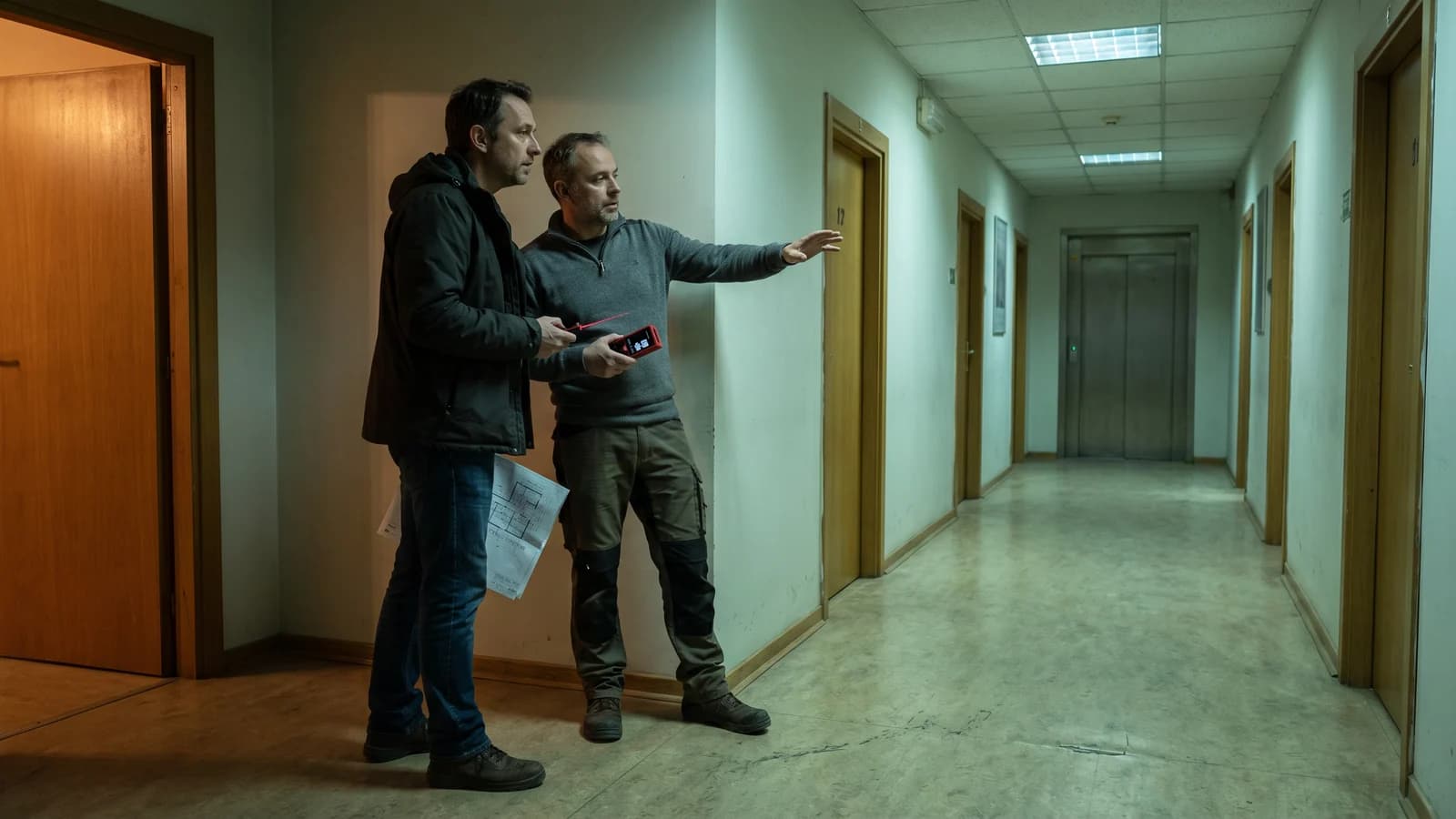
This applies beyond thrillers. A divorce argument in a restaurant kitchen changes when the ticket printer will not stop. A confession in a nursing home changes when the speaker must keep smiling through a medication round. Physical reality is pressure wearing work shoes.
Steal this: choose one scene and list ten facts about the location, job or tool involved. Use only the two facts that most complicate the character’s goal.
4. Report the movie you can see
There is a clean difference between knowing what happens in a scene and seeing the scene.
You know the detective realizes her partner has betrayed her. Fine. Where does her attention land? What is already happening when the realization arrives? What does she do so the partner will not know she knows?
On the Writers Guild of America East’s OnWriting podcast, Gilroy described his approach as reporting on a movie he was seeing. He also admitted that a scene can stall when he has no point of entry—until an image, a sound, an object or a line gives him the hook.
That does not mean purple prose or camera choreography. It means the page delivers playable evidence.
Compare:
Mara realizes Owen sold her out. She hides her anger.
with:
Owen keeps talking. Mara reaches for the sugar, tears open one packet, then another, then a third. She drinks the coffee black.
The second version lets the realization happen in the reader. It gives the actor behavior and protects the character’s strategy.
When a scene refuses to start, try five doors:
- The object: What is somebody handling badly?
- The sound: What do we hear before we understand it?
- The interruption: What ordinary obligation refuses to pause for the drama?
- The lie: What false sentence is already in progress?
- The spatial change: Who sits, leaves, blocks a door or crosses the room?
Steal this: remove the first three lines of dialogue from a flat scene. Replace them with one visible action that reveals the same conflict.
5. Budget the audience’s attention
The audience has enough brainpower to follow a complicated story. What it does not have is infinite willingness to spend that brainpower on the wrong thing.
In a 2025 Scriptnotes conversation, Gilroy described thinking about the “calories” viewers spend on information. A confusing bump can steal attention from the dramatic substance of the scene. The goal is not to make everything simple. It is to make the intended difficulty clear.
That distinction could rescue half the thrillers currently dying in writers’ folders.
Imagine a scene where an accountant discovers that her boss has funded a political assassination. The audience may need to understand:
- what number is wrong;
- why she is the only person who notices;
- who can see her screen;
- what happens if she reacts.
It probably does not also need the company’s complete reporting structure, three unexplained acronyms and the history of a shell corporation introduced by a voice on speakerphone.
Build an information budget for the scene:
| Information | Audience needs it now? | Delivery method |
|---|---|---|
| The payment is impossible | Yes | Her routine breaks when she sees it |
| The recipient is dangerous | Yes | She recognizes a name established earlier |
| How the whole scheme works | Not yet | Save it for the choice it complicates |
| Her boss suspects her | Yes | His reflection appears in her monitor |
The key question is not “Is this clear?” It is “What do I want the audience spending attention on during this beat?”
Exposition is expensive. Spend it where it creates dread, surprise or a decision.
Steal this: circle every new noun in a scene—person, program, place, rule, object. If more than three arrive before the conflict does, delay one.
6. Let the ending pull the story forward
Knowing the ending is not a creativity prison. It is a gravity system.
With Andor, the destination was fixed: the series had to deliver Cassian into the beginning of Rogue One. Gilroy told StarWars.com that those limitations helped because the writers knew where the story ended. On Scriptnotes, he called that knowledge freeing.
Notice what a known destination gives you:
- Dramatic irony: the audience may understand the cost before the character does.
- Selection pressure: not every interesting detour deserves a season.
- Character measurement: each major choice can move the protagonist toward or away from the final self.
- Motif control: images and lines can gather meaning instead of merely recurring.
- A real climax: the story can cash the promise it made at the beginning.
You do not need every plot beat before page one. You need the final irreversible choice.
For the public defender premise, perhaps the ending is not “she wins the case.” It is: she exposes the family lie in open court, saves her client and loses the relationship she was trying to protect.
Now the middle has direction. Every compromise can make that choice harder. Every apparent victory can increase its price.
This complements a strong screenplay outline, but it is more specific than “Act Three happens.” Write the ending as a transaction:
To gain this, the protagonist must finally surrender that.
Steal this: if you cannot name what the protagonist willingly loses at the climax, the ending may be an event rather than a decision.
7. Write with the people who must build it
The romantic picture of the screenwriter is one brilliant person protecting a perfect document from everybody with notes.
Gilroy’s working process looks more like a temporary government.
On Scriptnotes, he described bringing production designer Luke Hull into an intensive story conference with the writers and producer while the season was being broken. The team knew what could be built, afforded and managed. The Writers Guild Foundation’s conversation with the Andor writers also foregrounds the collaborative work of Tony Gilroy, Dan Gilroy, Beau Willimon and Tom Bissell; the Peabody Awards’ production credits likewise identify all four writers.
This matters because collaboration is not merely receiving opinions after the draft. It can generate story.
A production designer asks how long the corridor is. Suddenly the writer must decide whether the character can see the exit.
An actor asks why a character stays seated. Suddenly the scene exposes a power move nobody named.
An editor asks which reaction matters. Suddenly two lines of explanation disappear.
Even if you are writing a spec alone, you can simulate these collaborators:
- The actor pass: Is every emotional turn playable as behavior?
- The designer pass: Does the location create story, or merely contain it?
- The producer pass: If this expensive element vanished, what dramatic function must survive?
- The editor pass: Where can the scene enter later and leave earlier?
- The reader pass: Which fact is obvious only because you wrote the outline?
Production awareness does not mean making every spec cheap. It means knowing what the difficult element buys. Blow up the bridge if the bridge is the story. Do not blow it up because page 72 looked lonely.
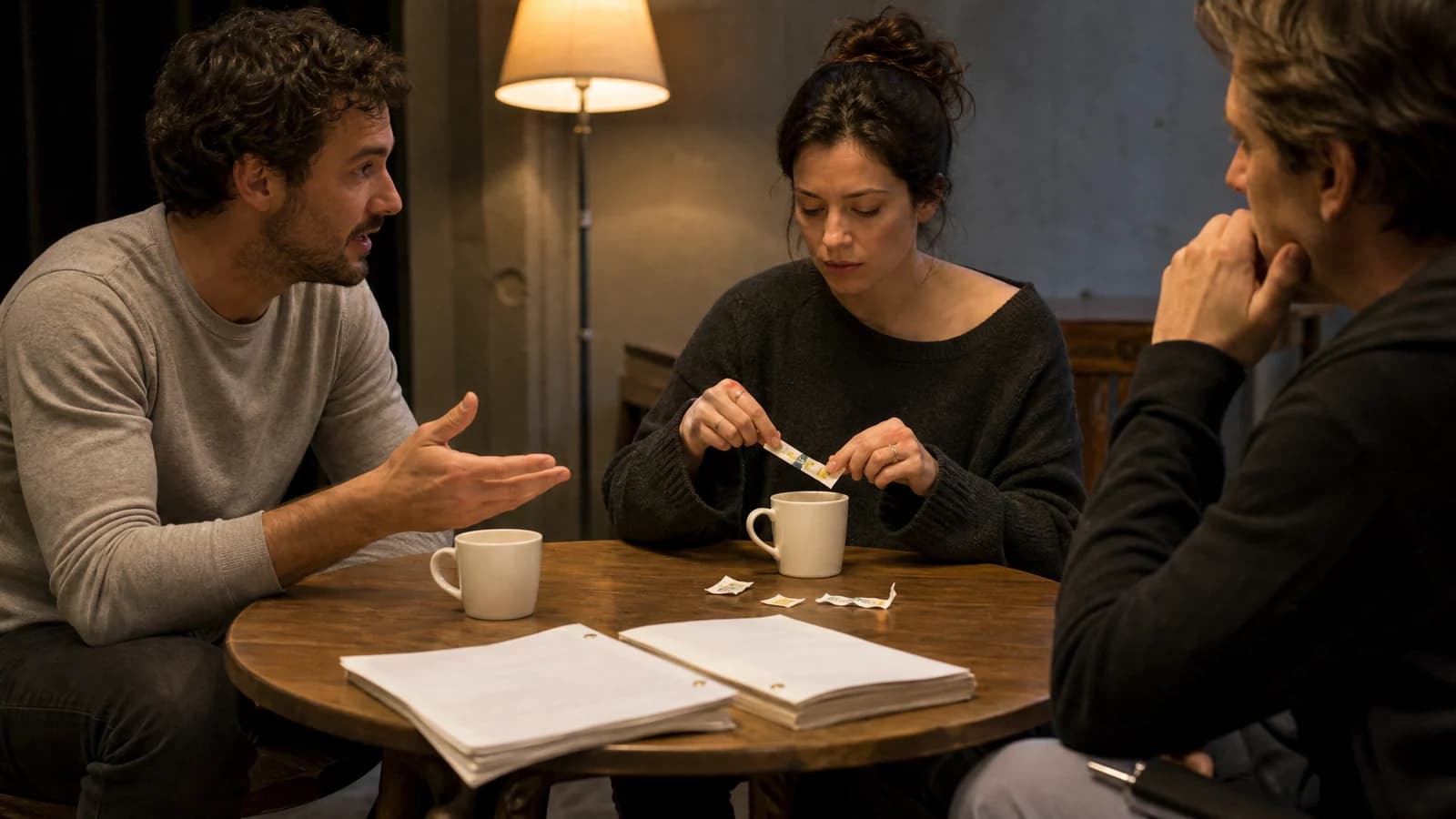
Steal this: invite one reader to give notes from a single department’s point of view. “What would an actor need?” produces better feedback than “Did you like it?”
8. Treat every stage as writing
Some writers imagine a finish line labeled FINAL DRAFT, beyond which other people merely execute the screenplay.
Gilroy describes something much more continuous. On Scriptnotes, he said the writing on Andor ran from the earliest conception and design conversations through drafts, page turns, editing and final ADR. That does not mean a spec writer should endlessly polish. It means the story continues to reveal itself when tested against readers, actors, images and time.
The useful version for your draft is a series of passes with different jobs:
- Pressure pass: Does every sequence tighten the central problem?
- Behavior pass: Are feelings expressed through choices instead of labels?
- Reality pass: Do jobs, locations and objects behave specifically?
- Information pass: Is the audience confused only where you intend?
- Ending pass: Does the climax resolve the story’s governing contradiction?
- Production pass: Does every difficult element earn its cost and attention?
- Read pass: Is the movie vivid at screenplay speed?
Do not run all seven at once. That is how a structural rewrite becomes three hours spent replacing “looks” with “glances.”
If the foundation is moving, use the screenplay rewrite process to diagnose the largest problem first. Dialogue polish cannot rescue a protagonist whose final choice has no cost.
Steal this: give each pass a one-sentence mission and a stop condition. “Make the antagonist’s strategy legible in every encounter” can be finished. “Make it better” cannot.
The Gilroy scene test
Use this on the scene you keep reopening without improving:
| Question | Strong answer | Warning sign |
|---|---|---|
| What pressure sentence does the scene activate? | One clear contradiction | “It develops the world” |
| What does each person privately want? | Competing playable goals | Everybody wants information |
| Why can this happen only here? | Location changes tactics | The setting could be any room |
| What is the visual or sonic entry point? | A concrete hook | Two people begin by explaining |
| What should the audience track? | One main question | Five new terms compete for focus |
| How does the ending alter the scene? | The destination creates irony | The scene points nowhere |
| What can a collaborator test? | Behavior, space, rhythm or cost | The scene exists only in prose |
| What changes before the cut? | Power, knowledge, commitment or risk | The scene ends as it began |
Now perform the bureaucracy exercise:
- Put three people in a room where a routine decision must be approved.
- Give each person a different private reason to need the same outcome.
- Give the lowest-status person the most dangerous information.
- Make the room itself prevent an honest conversation.
- End with approval—but make the victory worse than refusal.
No blasters. No assassins. No speech about the system. If the scene works, the system will be visible in who interrupts whom, who touches the document and who has to ask permission to leave.
That is the real lesson of Andor screenwriting: institutions become dramatic when they alter ordinary behavior.
Build the machine, then listen for the heartbeat
Tony Gilroy’s writing process is easy to admire for its intelligence. That can hide the more useful truth: the intelligence is in service of emotion.
Research makes the danger credible. Structure makes the pressure accumulate. Production knowledge makes the world tangible. Information control keeps the audience pointed at the choice. Empathy keeps every character from turning into a job title.
If you want another filmmaker’s approach to structure, compare Gilroy’s method with Christopher Nolan’s screenwriting lessons. If your scene mechanics work but the voices flatten out, use the screenplay dialogue guide to separate what characters say from what they are trying to do.
Then test the draft you actually wrote—not the elegant version still living in your head. AI-powered screenplay analysis can help surface passive stretches, uneven character arcs, pacing changes and places where the reader may be spending attention on the wrong question. You remain the writer, the judge and the person who knows what the movie is trying to become.
Create a free account and your one welcome credit can be used for one free Quick Analysis. Run it before the line-polish pass. If the report cannot see the pressure sentence, the ending’s cost or the protagonist’s changing behavior, you have found the right level of problem to investigate.
Build the machine carefully. Then make sure there is still a frightened, ambitious, contradictory human being trapped inside it.
Sources
- Scriptnotes 682: The Second Season with Tony Gilroy — Scriptnotes / John AugustAccessed 2026-08-23
- Episode 104: Tony Gilroy, Andor — Writers Guild of America EastAccessed 2026-08-23
- Making a Revolutionary: Inside Andor Season 2 with Tony Gilroy — StarWars.com / LucasfilmAccessed 2026-08-23
- The Education of Cassian Andor: Creator Tony Gilroy Explores the Nuance of Andor — StarWars.com / LucasfilmAccessed 2026-08-23
- Screenwriters’ Lecture Series: Tony Gilroy — BAFTAAccessed 2026-08-23
- Disney+ Q&A with Andor creator Tony Gilroy and writers Tom Bissell, Dan Gilroy and Beau Willimon — Writers Guild FoundationAccessed 2026-08-23
- Andor: A Star Wars Story — Peabody Award profile — Peabody AwardsAccessed 2026-08-23